At a Glance
Best For
Overview
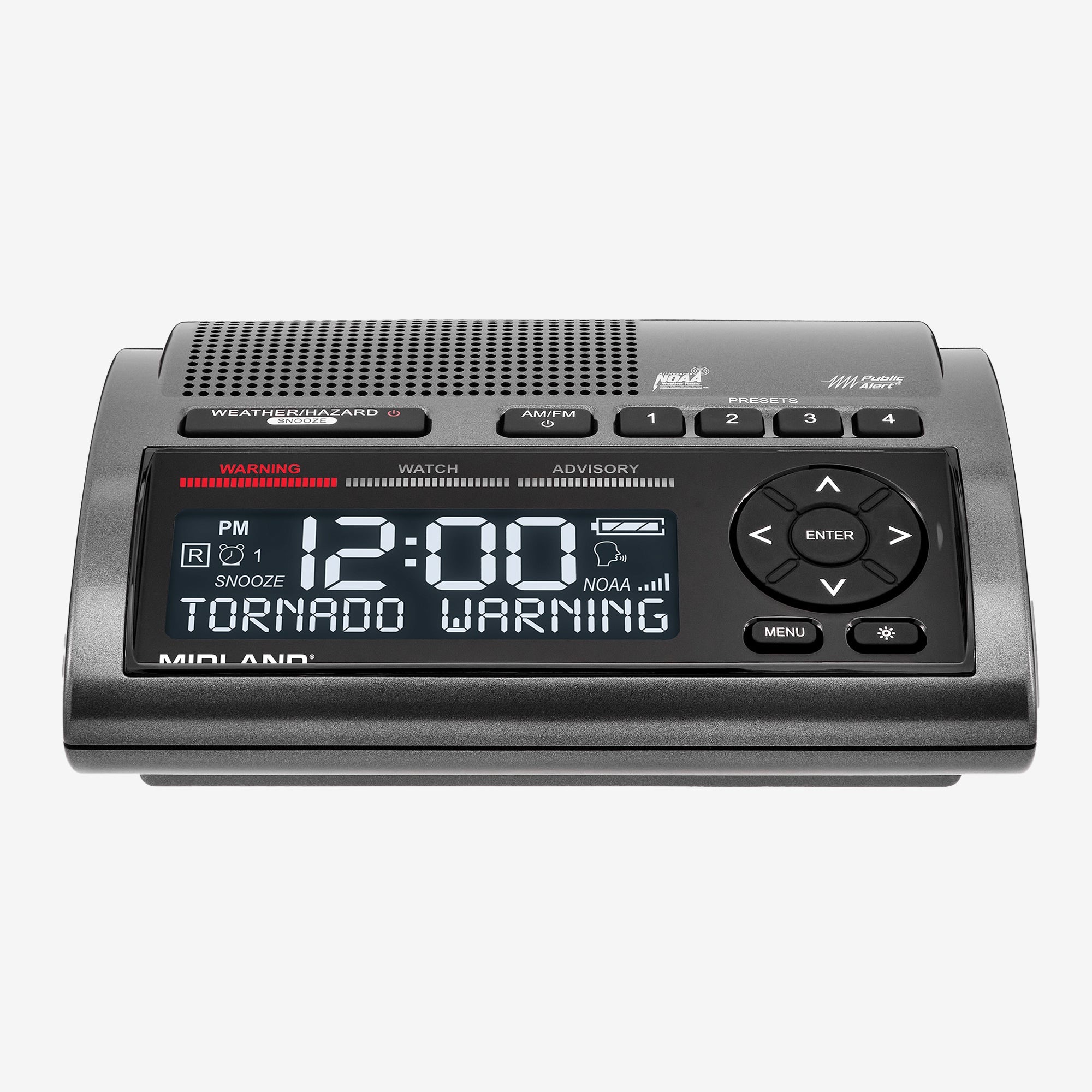
The Midland WR400 is the alert layer for a caregiver home because it asks almost nothing from the person being protected. It stays plugged in, listens for official alerts, and uses sound, voice, and light when the warning matters.
Pros & Cons
Pros
- Plug-in with 4-AA battery backup: continues alerting through a power outage — exactly the moment it is needed most
- SAME (Specific Area Message Encoding) county-level programming filters out irrelevant state-wide alerts; only the user's county wakes the device
- Three alert modalities — 85 dB siren, synthesized voice announcement, and tri-color flashing LED — accessible to elderly users with hearing or vision impairment
- 80+ alert types (NWS weather + civil FEMA alerts) with no subscription, no app, no internet required
- Dual alarm clock + AM/FM radio: replaces bedside radio so it stays plugged in and relevant 24/7
Cons
- Programming the SAME county codes requires reading the manual once — not truly zero-setup out of the box
- Siren at 85 dB can startle; elderly users with heart conditions may want to lower the alarm volume in settings
- No battery-only portable mode beyond backup AA cells; not designed for travel
Midland WR400 Deluxe NOAA Weather Alert Radio with SAME Localized Programming, 80+ Emergency Voice & Flashing Alerts, Alarm Clock/AM-FM Radio
Amazon details may change after publication.
Why It Beats A Phone Alert Alone
Phones are easy to silence, misplace, drain, or leave in another room. A dedicated NOAA alert radio has one job and a fixed location. For an elderly parent, that predictability matters more than another app.
SAME county programming is the key feature. Once set correctly, the radio can filter for the local area instead of turning every distant warning into background noise.
Setup Is The Caregiver's Job
The WR400 is not zero-setup. Someone needs to program the county codes, choose the alert settings, add backup batteries, and test the alarm. That should be the caregiver, not the parent.
After that, the radio can live like a bedside clock. The goal is no new habit: it is already plugged in, already listening, and already backed up when the power fails.
When It Is Not Enough
A weather alert does not make a person reachable. Pair the WR400 with a power layer and a simple local or SOS layer if the parent lives alone. The radio tells them what is happening; the rest of the kit keeps medical equipment running and gives them a way to reach help.
Our Verdict
The WR400 is the correct choice for a caregiver kit because it requires no new habits: plug it in, program the home county once, and it wakes the household with voice announcements and flashing lights 24/7 — even during a power outage via AA backup. For an elderly parent who cannot monitor a smartphone or app during a night storm, a dedicated plug-in alert device that shouts and flashes is the most reliable last line of warning.
Midland WR400 Deluxe NOAA Weather Alert Radio with SAME Localized Programming, 80+ Emergency Voice & Flashing Alerts, Alarm Clock/AM-FM Radio
$100
Amazon details may change after publication.
| Full Specifications | |
|---|---|
| Kit Role | Plug-in home weather and civil emergency alert monitor; self-alerts 24/7 with no action required from user |
| Category | weather-radio |
| Renter Install | plug-in |
| Building Fit | any room |
| License Required | No |
| Subscription Required | No |
| Subscription/mo | 0$ |
| Max Power | — |
| Channels | 7 |
| Clear LOS Range | — |
| Coverage | — |
| Battery Life | — |
| Water Resistant | No |
| SOS Button | No |
| Weather Alerts | Yes |
| All Carriers | No |
| 2-Way Messaging | No |
Frequently Asked Questions
Does the WR400 work during a power outage?
Is it too complicated for an elderly parent?
Why not use only smartphone alerts?
Compare With Similar Outage Kit Components
Head-to-Head Comparisons
Midland WR400 Deluxe NOAA Weather Alert Radio with SAME Localized Programming, 80+ Emergency Voice & Flashing Alerts, Alarm Clock/AM-FM Radio
$100
Amazon details may change after publication.