Outdoor inverter generator & safety setup
For a two-adult home · 3 purchase packages
A Champion 201323 inverter, 50-foot grounded outdoor cord and three CO alarms for a separately planned outdoor generator location. Fuel and installation are outside this list.
Buy one of each listed package. A multipack or case counts as one purchase.
Review all 3 packages on Amazon, then confirm Add To Cart. Sign-in may be required. Check for unavailable items before relying on this kit.
As an Amazon Associate, we earn from qualifying purchases. The cart link opens Amazon for review and confirmation. The Idea List lets you browse individual products. OutageKit does not sell or ship an assembled kit.
Source-researched · Reviewed 2026-11-02
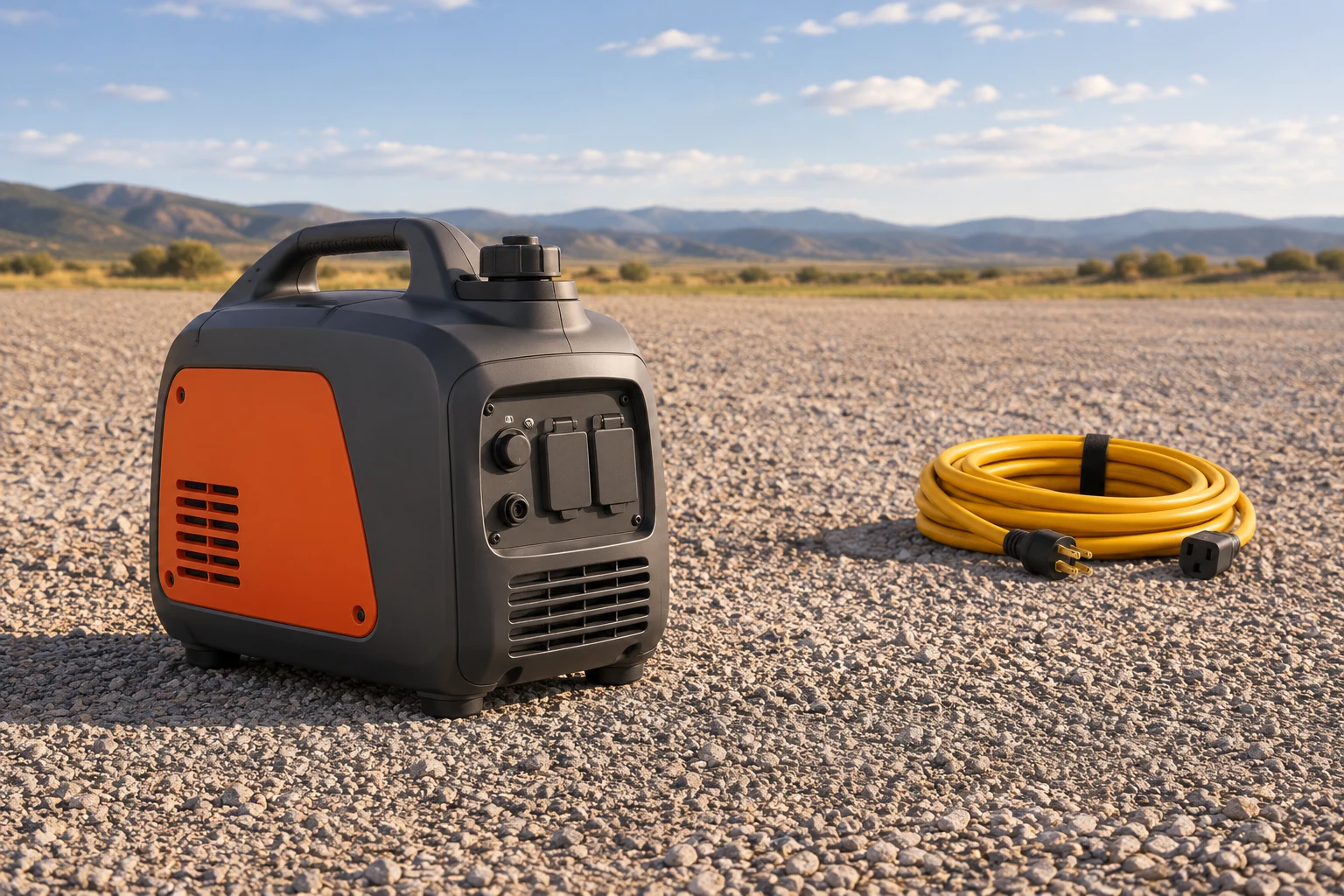
One of each. Here’s the list.
Check what you already have before buying. Several kits share supplies; choose the modules you need instead of buying every kit.
- 1package
Champion 201323 outdoor dual-fuel inverter
Purchase unit: One model 201323 generator package
One inverter generator with manufacturer LPG hose, oil, funnel and spark-plug wrench; fuel cylinder/gasoline not included.
A separately planned outdoor source for selected plug-in loads.
- Model
- 201323
- Running output on gasoline (W)
- 1850
- Running output on propane (W)
- 1665
- Starting output (W)
- 2500
- AC voltage (V)
- 120
- For an outdoor site at least 20 feet from the home and openings, exhaust away; never indoors, in a garage or on an enclosed balcony.
- Fuel type changes running output; add appliance starting loads and stay within generator, outlet and cord ratings.
- CO Shield is supplemental and does not make enclosed operation safe.
- Check local sale/emissions rules for this exact model before purchase.
- 1package
Southwire grounded outdoor cord — 50 feet, 12/3
Purchase unit: One 50-foot cord
One 2548SWUSA1 SJTW outdoor extension cord with grounded plug and lighted receptacle.
Reach a selected appliance from a safe generator location.
- Model
- 2548SWUSA1
- Length (ft)
- 50
- Gauge
- 12/3
- Maximum current (A)
- 15
- Maximum voltage (V)
- 125
- Connector
- NEMA 5-15 grounded
- 15A maximum is a cord limit, not the generator capacity; at 120V, 15A is 1800W before considering the lower appliance/generator limits.
- Use only for loads and locations approved by the appliance/generator instructions; no household wall-outlet backfeeding.
- Length does not establish safe placement by itself; do not daisy-chain or crush it through a door.
- 1package
First Alert CO400 battery alarms — three-pack
Purchase unit: One three-alarm retail package
Three CO400 battery-operated carbon monoxide alarms; check supplied batteries and exact included instructions.
Supports placement on levels and near sleeping areas while outdoor equipment is used.
- Alarms
- 3
- Model
- CO400-3
- Three alarms may not cover every required location in your home.
- CO alarms are not smoke alarms and do not permit indoor use of any engine or outdoor stove.
- Do not put rechargeable cells in an alarm unless its own instructions explicitly permit them.
Ready to add this kit?
3 purchase packages for two adults. Buy one of each; check what you already have.
Review availability on Amazon, then confirm Add To Cart. Unavailable items may be excluded.
Why these supplies
Choose a few loads
The 201323 is rated for 1850W running on gasoline or 1665W on propane and 2500W starting. It is a 120V portable source, not a whole-house installation. Establish starting demand and the lowest rating of generator, receptacle, cord and appliance. Sources: [2], [5]
Accessories have defined roles
The grounded cord serves one selected load path; its 15A limit can be below the generator rating. Three CO alarms support a home placement plan but may not cover all required levels and sleeping areas. Sources: [5], [6]
Separate option, shared supplies
Some products also appear in the home starter and other modules. Compare exact contents before buying another collection; you do not need to buy every list. Sources: [1]
Put it together
- Read the exact model manual, establish safe outdoor placement and check local emissions/sale requirements.
- Install/test CO alarms according to their own instructions before generator use.
- Add/check oil and connect only the manufacturer-approved fuel setup as directed; conduct a practice run outdoors.
- Connect a selected appliance using the fully uncoiled, dry, undamaged grounded cord within all ratings; keep connections protected and trip routes clear.
Store it & keep it ready
- Follow the generator manual’s break-in, oil, exercise and fuel-storage schedule; inspect before each use.
- Let the generator cool before refueling and follow local fuel disposal rules.
- Test alarms as their manual directs and replace batteries/alarms by their approved schedule.
Label your supplies with the packed date, storage location and next check date. Follow each manufacturer’s storage instructions and food labels.
Safety & limits
Carbon monoxide can kill
Operate outdoors at least 20 feet from the home and openings, with exhaust away. Never in a home, garage, basement, shed or enclosed balcony—even with doors open. CO Shield and CO alarms do not make indoor use safe. Sources: [3], [4]
No backfeeding or improvised wiring
Never feed power into a household wall outlet or use a male-to-male cord. A licensed electrician must design/install any building-circuit transfer arrangement. Keep equipment dry, observe clearances and use rated grounded cords. Sources: [3], [4]
No automatic runtime promise
Fuel quantity, load, weather and maintenance determine operation. Do not assume a refrigerator will start or that fuel on hand provides a particular number of days. Sources: [2]
Sources & package checks
Buying links are not evidence. These references support the plan and product facts; they do not establish hands-on testing.
- 1. Power outage safety
American Red Cross · Checked 2026-11-02
Prepare lights, communication, food and water; plan for individual needs and an alternate destination when the home becomes unsafe.
- 2. 201323 dual-fuel inverter generator
Champion Power Equipment · Checked 2026-11-02
Model 201323: 2500W starting; 1850W gasoline or 1665W propane running; household 120V receptacles, included LPG hose and oil. The model-specific manual is linked under Downloads.
- 3. Portable generator safety alert
CPSC · Checked 2026-11-02
Outdoor operation at least 20 feet from openings, carbon monoxide risk, outdoor grounded extension cords, dry placement, cooling before refueling and no backfeeding.
- 4. Generator safety guidance
Utah Division of Emergency Management · Checked 2026-11-02
Outdoor separation, carbon monoxide alarms, properly rated grounded cords and a licensed electrician for a transfer switch connecting building circuits.
- 5. Southwire 2548SWUSA1 specification
Southwire · Checked 2026-11-02
One 50-foot 12/3 SJTW outdoor grounded cord, NEMA 5-15, 125V maximum and 15A maximum. It does not increase generator output.
- 6. CO400 carbon monoxide alarm
First Alert · Checked 2026-11-02
Battery-operated CO400 electrochemical alarm and manufacturer placement/maintenance instructions. Three alarms are not a universal whole-home placement plan.
OutageKit · Assembly checklist · Reviewed 2026-11-02
Outdoor inverter generator & safety setup
Two adults. Equipment module; runtime varies by use. One of each purchase package below.
Gather these packages
- Champion 201323 outdoor dual-fuel inverter
1 × One model 201323 generator package
One inverter generator with manufacturer LPG hose, oil, funnel and spark-plug wrench; fuel cylinder/gasoline not included.
Care: Read the supplied manual; fill/check oil, perform required maintenance and rehearse safe outdoor setup before storms.
- Southwire grounded outdoor cord — 50 feet, 12/3
1 × One 50-foot cord
One 2548SWUSA1 SJTW outdoor extension cord with grounded plug and lighted receptacle.
Care: Inspect before each use, fully uncoil, keep connections dry and route clear of damage and walkways.
- First Alert CO400 battery alarms — three-pack
1 × One three-alarm retail package
Three CO400 battery-operated carbon monoxide alarms; check supplied batteries and exact included instructions.
Care: Install and test according to the included manual; note replacement dates and use only its approved replacement batteries.
Plan separately
- Locally purchased compatible fuel and approved containers/cylinder; fuel storage must follow local rules.
- A genuinely outdoor location at least 20 feet from the home, doors, windows and vents, with exhaust facing away. If unavailable, skip this module.
- Correct replacement oil, maintenance supplies, approved alarm batteries and additional alarms as your home requires.
- A licensed electrician and appropriate transfer equipment for any connection to building circuits; this list is for selected plug-in loads.
Assemble & label
- Read the exact model manual, establish safe outdoor placement and check local emissions/sale requirements.
- Install/test CO alarms according to their own instructions before generator use.
- Add/check oil and connect only the manufacturer-approved fuel setup as directed; conduct a practice run outdoors.
- Connect a selected appliance using the fully uncoiled, dry, undamaged grounded cord within all ratings; keep connections protected and trip routes clear.
Label: packed on __________ · next check __________ · household location __________
Check & rotate
- Follow the generator manual’s break-in, oil, exercise and fuel-storage schedule; inspect before each use.
- Let the generator cool before refueling and follow local fuel disposal rules.
- Test alarms as their manual directs and replace batteries/alarms by their approved schedule.
Safety reminders
Carbon monoxide can kill: Operate outdoors at least 20 feet from the home and openings, with exhaust away. Never in a home, garage, basement, shed or enclosed balcony—even with doors open. CO Shield and CO alarms do not make indoor use safe.
No backfeeding or improvised wiring: Never feed power into a household wall outlet or use a male-to-male cord. A licensed electrician must design/install any building-circuit transfer arrangement. Keep equipment dry, observe clearances and use rated grounded cords.
No automatic runtime promise: Fuel quantity, load, weather and maintenance determine operation. Do not assume a refrigerator will start or that fuel on hand provides a particular number of days.
Compare this checklist with supplies already on hand and overlapping kits. Personal, medical, dietary and access needs require a separate plan.